And was the holy Lamb of God,
On Englands pleasant pastures seen!
- And did those feet, William Blake

fredag 28. september 2012

January Flood


Due to heavy rainfall the Ouse and other Yorkshire rivers are now heavilyflooding and for the past four days the water levels have risen significantly, causing a lot of chaos in York and elsewhere. It is not unusual for the Ouse to overstep its banks - quite the contrary - but the masses of water currently sweeping through the city are extraordinary. I have myself seen the Ouse flood - and I have found some primal excitement beholding the spectacle - but from photographs put up by friends in York, I understand that this flooding exceeds everything I've experienced myself.


The principal concern in such matters is of course the individuals affected by the Yorkshire deluge and I wish them all the very best. Yet at the same time I can't help feeling a bit sad for not being there to see this for myself. To me there is something deeply fascinating about water - probably owing to my Western Norwegian upbringing - and I find few things as spellbinding as river scorning its boundaries.

When I studied in York last year I witnessed two floods myself, but - as stated - none of them so great as what is happening now. The January flood, for instance, was less of a violent affair, almost casual, but of course serious in its own sedate way. In this blogpost I'm presenting yet another poem, chiefly because I do not possess any original material on the current event, and partly because I have too little time for long, researched blogposts.


January Flood

The Ouse, January 2011

As if to take revenge the river came -
So full with earth it could not keep it in -
To repossess what man long since had claimed
With steel and stones in monetary whims.

As if to take revenge, as if to scorn
What man took pains to raise from grass and clay
The river spews out what the rain had torn
From out the fields and folds and washed away.

The river came, drunk, dull in a sluggish speed;
Like some old force grown fat from wasted years
It came, pathetic, pleased with prospective fears;
It passed and left its vestiges of greed.
- November 17-20 2011


mandag 24. september 2012

Joseph Brodsky in York


In a previous blogpost I wrote about my writer's tryst, where I spent time working with my MA thesis this summer. Of course, no work can be properly done without the sufficient amount of leisure so in-between work I relaxed with a book of verses by Joseph Brodsky, well, two actually. These books were selected translations in Norwegian, beautifully crafted, and I was of course immediately taken with Brodsky's elegy for W. H. Auden, particularly because it evokes my beloved city of York, Auden's birthplace. This poem is a part of a sequence titled In England and it is taken from Collected Poems in English, a book in the series Oxford Poets by Carcanet (2001). The poems in this book have been translated either by Brodsky alone or in cooperation with others. It is not specified which alternative applies for In England.


York: In Memoriam W. H. Auden

The butterflies of northern England dance above the goosefoot
below the brick wall of a dead factory. After Wednesday
comes Thursday, and so on. The sky breathes heat;
the fields burn. The towns give off a smell of striped
cloth, long-wrapped and musty; dahlias die of thirst.
And your voice - "I have known three great poets. Each
one a prize son of a bitch" - sounds in my ears
with disturbing clarity. I slow my steps

and turn to look round. Four years soon
since you died in an Austrian hotel. Under the crossing sign
not a soul: tiled roofs, asphalt, limestone,
poplars. Chester died, too - you know that
only too well. Like beads on a dusty abacus,
sparrows sit solemnly on wires. Nothing so much
transforms a familiar entrance into a crowd of columns
as love for a man, especially when

he's dead. The absence of wind compels taut leaves
to tense their muscles and stir against their will.
The white butterflies' dance is like a storm-tossed ship.
A man takes his own blind alley with him wherever he goes
about the world; and a bent knee, with its obtuse angle,
multiplies the captive perspective,
like a wedge of cranes holding their course
for the south. Like all things moving onward.

The emptiness, swallowing sunlight - something in common with
the hawthorn - grows steadily more palpable
in the outstretched hand's direction, and
the world merges into a long street where others live.
In this sense, it is England. England, in this sense,
still an empire and fully capable - if
you believe the music gurgling like water -
of ruling waves. Or any element, for that matter.

Lately, I've been losing my grip a little: snarl
at my shopwindow reflection; while my finger
dials its number, my hand lets the phone fall.
Closing my eyes, I see an empty boat,
motionless, far out in the bay.
Coming out of the phone booth,
I hear a starling's voice - in its cry alarm.
But before it flies away the sound

melts in the air. Whose blue expanse, innocent of objects,
is much like this life here (where things stand out more in the desert),
for you're not here. And vacuum gradually
fills the landscape. Like flecks of foam,
sheep take their ease on bottle-green waves
of Yorkshire heather. The corps de ballet of nimble
butterflies, taking their cue from an unseen bow,
flicker above a grass-grown ditch, giving the eye

no point of rest. And the willow herb's vertical stalk
is no longer than the ancient Roman road,
heading north, forgotten by all at Rome.
Subtracting the greater from the lesser - time from man -
you get words, the remainder, standing out against their
white background more clearly than the body
ever manages to while it lives, though it cry "Catch me!" -

thus the source of love turns into the object of love.


mandag 17. september 2012

Translations by Helen Waddell

and abstinence crowns all our care
with martyr-laurels for this day
- Veni Coronaberis, a garland for Helen Waddell, Geoffrey Hill

One of the books I picked up during my last trip to York was a volume of Medieval Latin lyrics translated into English by Helen Waddell and published in 1929. To me this was a phenomenal treasure as I have a great interest in Medieval literature in general and Medieval poetry in particular. In this blogpost I would like to share with you a small selection of short poems from my newly-acquired volume.


Helen Jane Waddell (1889-1965) was born in Tokyo to a missionary family and received her education at Victoria College and then at Queen's University in Belfast. From there on she embarked on a remarkable life of letters that earned her a wide-standing and long-lasting reputation. A formidable Medievalist she mastered both fiction and non-fiction and published several significant books: Her study of the performers of Medieval Latin poetry, The Wandering Scholars (1927), was an immediate success and so was her novel Peter Abelard (1933).

Despite her academic brilliance she was not strictly accurate in her translations and she rendered her English versions in a language reminiscent of the bardolatry of the 19th century, giving the lyrics a stilted quality even more noticeable to a modern ear. This is not, however, to say that she was a bad translator, for translation is always an art of compromise and fraught with contemporary expections the translator must take into account. I do not myself speak Latin, nor do I read it very well, so I am not in a position to point out Helen Waddell's various inaccuracies, but I have given here the original texts parallel with her renditions in order to give people of Latinity a little challenge.


The Translations:


From an MS. of St Rémy at Rheims

Pulchra comis annisque decens et candida vultu             Young and gold-haired, fair of face,
dulce quiescenti basia blanda dabas.                              Thou gav'st me tender kisses in my sleep.
si te iam vigilans non unquam cernere possum,                If waking I may never look upon thee,
somne, precor, iugiter lumina nostra tene.                       O Sleep, I pray you, never let me wake!


From an MS. of Beauvais

Te vigilans oculis, animo te nocte requiro,            By day mine eyes, by night my soul desires thee,
victa iacent solo cum mea membra toro.              Weary, I lie alone.
vidi ego me tecum falsa sub imagine somni.          Once in a dream it seemed thou wert beside me;
somnia tu vinces, si mihi vera venis.                     O far beyond all dreams, if thou woulds come!


From an MS. of Beauvais

O blandos oculos et inquietos                         O lovely restless eyes, that speak
et quadam propria nota loquaces!                   In language's despite!
illic et Venus et leves Amores                          For there sits Beauty, and the little Loves:
atque ipsa in medio sedet Voluptas.                Between them dwells Delight.


From an MS. of Monte Cassino

Ad Paulum Diaconum Written to Paul the Deacon at Monte Cassino

Hinc celer egrediens facili, mea carta, volatu                    Across the hills and in the valley's shade,
per silvas, colles, valles quoque prepete cursu                 Alone the small script goes,
alma deo cari Benedicti tecta require.                             Seeking for Benedict's beloved roof,
Est nam certa quies fessis venientibus illuc,                     Where waits its sure repose.
hic olus hospitibus, piscis hic, panis abundans;                They come and find, the tired travellers,
pax pia, mens humilis, pulcra et concordia fratrum,         Green herbs and ample bread,
laus, amor et cultus Christi simul omnibus horis.              Quiet and brothers' love and humbleness,
                                                                                             Christ's peace on every head.


Hrabanus Maurus

Ad Eigilum de libro quem scripserat                     To Eigilus, on the book that he had written

Nullum opus exsurgit quod non annosa vetustas      No work of men's hands but the weary years
expugnet, quod non vertat iniqua dies.                    Besiege and take it, comes its evil day:
grammata sola carent fato, mortemque repellunt.    The written word alone flouts destiny,
preterita renovant grammata sola biblis.                  Revives the past and gives the lie to Death.
rupe, suo legem cum dederat populo.                     God's finger made its furrows in the rock
sunt, fuerant, mundo venient quae forte futura,        In letters, when he gave his folk the law.
grammata haec monstrant famine cuncta suo.       And things that are, and have been, and may be,
                                                                             Their secret with the written word abides.


Sedulius Scottus

Apologia pro vita sua                                             Written as scholasticus at Liége

Aut lego vel scribo, doceo scrutorve sophiam:        I read or write, I teach or wonder what is truth,
obsecro celsithronum nocte dieque meum.               I call upon my God by night and day.
vescor, poto libens, rithmizans invoco Musas,          I eat and freely drink, I make my rhymes,
dormisco stertens: oro deum vigilans.                      And snoring sleep, or vigil keep and pray.
conscia mens scelerum deflet peccamina vitae;        And very ware of all my shames I am;
parcite vos misero, Christe Maria, viro.                  O Mary, Christ, have mercy on your man.


Notes

The following notes are largely based on Helen Waddell's own from 1929.


Pulchra comis: This poem is found in the 9th-century Royal MS. 15. B. xix. The poem was attributed to Virgil by the scribe, while Aldhelm of Malmesbury attributed it to Ovid.


Te vigilans oculi/O blandos oculos: These two poems comes from an anthology of the late 9th or early 10th century whose MS. was lost as a consequence of the Revolution.


Ad Paulum Diaconum: 12th-century tradition attributed the lyric to Charlemagne. Paul the Deacon, at some point a monk at Monte Cassino, did end up in Charlemagne's service for a while, but that is probably the only kernel of truth in this tradition. Although Charlemagne's love of poetry is more or less an established fact, it is not known that he himself attempted the art. Paul the Deacon is most famously known as the author of The History of the Lombards.


Ad Eigilum de libro quem scripserat : Hrabanus Maurus (776-856) was given the nickname Maurus by Alcuin after a disciple of Benedict, the father of monasticism. In 842 he resigned from his position as abbot of Fulda, but after seven years of living in solitude with his books he was summoned by Louis the German and became archbishop of Mainz in 847. The rest of his life was marked by theological strife against the heretic - and one might yield to that beast Anachronism and say proto-Calvinist - Gottschalk who preached the predestined damnation of men.


Apologia pro vita sua: Sedulius Scottus (fl.848-74) was, as his name tells, originally from Ireland. He came to Liège sometime before 851 where he became a scholasticus and gained a reputation as a poet and a scholar. He is not to be confused with Coelius Sedulius, author of Carmen Paschale.


tirsdag 11. september 2012

Many sundry meats

And eet manye sondry metes, mortrews and puddynges,
Wombe cloutes and wilde brawen and egges [with grece yfryed].
- Piers Plowman, William Langland

He was deep in thoughts of bacon and eggs and toast and butter when he felt something touch him.
- The Hobbit, J. R. R. Tolkien


One of the recurring features of this blog is my exploration of British cuisine which I undertake partly to challenge the firmly rooted negative stereotypes it suffers from. The pith of the problem is indubitably that British hygiene is widely considered to be wanting and that this reflects on the food in unfortunate ways. Now there are issues to be had with hygiene in the British Isles - for instance the facts that they have separate taps for hot and cold water and like to carpet every inch of their floors - but the food deserves to be lauded far more often than it is. This August I returned once again to York and I made sure my diet consisted of things old and new, things salt and sweet and things with these common denominators: neither were particularly healthy, all of them were tasty.

Blackadder: Now; Baldrick, go to the kitchen and make me something quick and simple to eat, would you? Two slices of bread with something in between.
Baldrick: What, like Gerald, Lord Sandwich, had the other day?
Blackadder: Yes -- a few rounds of Geralders.
- Blackadder, S03E02


Sandwiches

The sandwich is one of the greatest culinary concepts ever invented and it is a great shame it is not as ubiquitous in Norway as it is in the UK. When I studied in York in 2011 I made a habit of dropping by Sainsbury's on my way to class and pick up one of the many sandwiches displayed there for breakfast. The sandwich has many incarnations and there seems to be no consensus as to what type of bread to use, nor what they may contain. Some features are of course fairly universal such as lettuce while others are reserved for one particular combination.


This picture is taken on a southbound train from Aberdeen via Edinburgh. The sandwich consists of lettuce, tomato, cheese, ham and pickles, a combination I have grown very fond of. However, the main reason for picking this particular sandwich, I think, was the name, since it reminded me about the Middle English dream poem
Piers Plowman.


This pork sandwich with apple sauce and sage stuffing - one of my absolute favourite foodstuffs in York - was purchased at Uppercrust on Lendal Street, a very small, charming shop with a very amiable staff and a nice selection of fillings.


One of the sweet ladies behind the counter added this piece of crackling to my sandwich. That was very nice indeed.


Technically this is a ciabatta, but since ciabatta essentially is Italian for sandwich I find it safe to include it here. This tasty delight was also purchased on Lendal Street, but in a different sandwich shop whose name I sadly have forgotten. I was informed about this place by one of my former flatmates of York last year and this time I followed her preferences and purchased this nice white goat cheese and pepper ciabatta.


This is a mango chutney sandwich bought at Pret-a-manger, a British chain of sandwich shops. It was delicious and the chutney blended very well with the ham and cheese. If I ever had my doubts about mango chutney up to this point, this sandwich did away with all that.


And of course, being in Britain, I washed it all down with some Yorkshire tea at the Three Legged Mare, a pub on High Petergate that does not serve food and therefore allows you to bring your own.


For ye han harmed us two in that ye eten the puddyng,

Mortrews and oother mete - and we no morsel hadde.
- Piers Plowman, William Langland

Pub food

When visiting York I took great advantage of my friends who lived there and one of them, poor girl, had to endure my presence for a whole week (which she bore with great composure). To rectify this major imposition I treated her to pub food a couple of times, one of the things we are both major fans of.


This pork burger with bacon was purchased at The Old White Swan, a beautiful pub situated on Goodramgate in a building from the late Middle Ages. We ate there twice and I feel comfortable saying that this is one of my absolute favourite pubs. How can it not be, the pub has a Tudor room?


Another of my favourite pubs is The Hole in the Wall on High Petergate and it remains a favourite for two reasons. First of all its selection of food is delicious and very reasonable, secondly it was the first pub I ate at when I came to York as a student. This time around I tried a horseradish burger which was a pleasing experience. I have through the years established a certain liking for horseradish, which of course is necessary for a burger like this: the taste of horseradish was really dominating.

 (...) I don't know the recipe; but it is biscuitish, keeps good indefinitely, is supposed to be sustaining, and is certainly not entertaining, being in fact very uninteresting except as a chewing exercise.
- The Hobbit, J. R. R. Tolkien

The Brits like their carbohydrates. They like them very much, as illustrated by this plate of battered chicken with barbecue sauce, bacon and sides purchased at The Hornblower in Ripon. Fortunately I like them too and I could thoroughly enjoy this meal, although I have to admit chicken needs not be battered at all.


[Britain]has broad fields and hillsides which are suitable for the most intensive farming and in which, because of the richness of the soil, all kinds of crops are grown in their season. It also has open woodlands which are filled with every kind of game.
- The History of the Kings of Britain, Geoffrey of Monmouth

Sundries

Rhubarb! Rhubarb! Rhubarb!
- Captain Rum, Blackadder S02E03

During my stay this August I suddenly became aware of one of the greatest differences between Norway and England when it comes to food: the English national culinary repertoire is simply much more varied than the Norwegian one. By this I mean that there is a greater number of fruits, meats and vegetables used in manufactured foodstuffs (i.e. food you can buy at the supermarket) than the case is in my home country. While Norwegian cordial, for instance, is based around a handful of fruits, English cordials cover a much wider range of tastes. This also reflects in ice cream, as illustrated by the two scoops above, one with blueberry, one with rhubarb.


 Cokes and hire knaves cryden, "Hote pies, hote"
Goode gees and grys! Go we dyne, go we!
- Piers Plowman, William Langland

Pies are perhaps even more emblematic of British cuisine than the sandwich and I am very enthusiastic about them. This particular specimen is a vegetable pie I was treated to while I lodged at a couple of friends for the last four days of my sojourn. I especially like this pie because it is decorated with a woodwose, and it was delicious.


I should of course not omit this risotto which, although not English in any way, was made by the friend I
first stayed with and was so tasty it deserves an effusive mentioning in this blogpost.

fredag 31. august 2012

Under the Greenwood Tree


He went into the garden, beneath the shade
- The Song of Roland, line 11 (translated by Glyn Webster)


During my most recent sojourn in York I spent most of my days meandering the town, seeking out things familiar and new alike. To walk the streets of York, however, can sometimes be somewhat of an ordeal, especially in tourist seasons when stereotypes of all walks of life flock through the street, draining the atmosphere out of the cityscape. At times these hordes must be endured, at time circumstance compelled me to navigate the thronged thoroughfares, dodging the onslaught of half-oblivious strangers trying to find their way through the streetweb. It was, however, wearisome in the long run, especially because tourists very often come off, as if by their own design, as crass, loud, ignorant and careless, standing without awe in the face of history.

It was, therefore, a great delight whenever I could retreat to a quiet corner of one of York's public parks, sit down by the trunk of a tree and read a book, left to myself and the immediate vicinity that for the most part remained empty and relatively quiet. In this blogpost I present two of my favourite spots in York, ideal for quiet contemplation, reading, prayer or perhaps even a little nap.

Resting under a greenwood tree of course becomes all the more pleasing when considering the mythic-historical connotations. In The Song of Roland both Charlemagne and King Marsile are seated under the branches of an old tree when conducting affairs of war and state. This image of the tree of council was prevalent in 19th-century Romanticist art, and the forest - maybe as a symbol of the wild as in Renaissance paintings - featured also in compositions not directly related to kings and warfare. An interesting example is Lawrence Alma-Tameda's 1862 painting of Venantius Fortunatus reading to Queen Radegund.

Sitting under a greenwood tree, therefore, reading a book and watching the world from a quiet tryst is a pleasant activity in itself, but being a historically minded Medievalist the iconography of the past lends an air of ancient venerability to the activity.


Yorkshire Museum and Gardens


Dean's Park


Come hither, come hither, come hither:
Here shall he see
No enemy
But winter and rough weather
- Under the Greenwood Tree, William Shakespeare


torsdag 23. august 2012

York Elegies


This summer I read Joseph Brodskys Roman elegies, a set of poems invoking the minutiae of everyday life and the great shadow of history at the same time. Having been to Rome some time ago I felt the poems resonating with me and it made me think of other places I had visited, places where I had spent as much time as it appeared Joseph Brodsky had spent in Rome. My thoughts naturally fled to York, a city regular readers of this blog will know I have a special place for in my heart. The next course of action was inevitable: I decided to write my own elegies in emulation of Brodsky's, only these were to be set in the heart of Yorkshire rather than the eternal city.

York Elegies
After Joseph Brodsky


I) January

The rain in England is different. By the banks of the Ouse
there are imprints of boots in dried and sun-cracked silt:
some vagrant walked here. It was - perhaps - me,
carefully making sense of a different home
like a mendicant scouting the city's outskirts
before lining up his hospital.
The river is borne away into the twilight
while I have just arrived,
still are we both just passing through
and even in this month of beginnings the end
can be sensed far closer than I should like.
So like the silt-framed footprint will I fade
until devouring time has wiped away
all traces of my visit I had left behind me.


II) February

Vagrants find their homes in the strangest nooks.
So I, the prodigal scholar, have found
my sheltered perch among the pigeons.
Here I share the skyline with these English chimneys
that breathe their carboniferous fogs mingling
with the mists of each and all seasons. Smoke
speaks of Albion's slumber, of giants long receded
from the world's theatrics, content with the quiet moor,
the country life. I, too, am content with little:
the writing desk, the sink, the creaking wardrobe,
the bed and bookshelves begging to be stacked;
this is the detail I find most pleasing.
Here will I make my garrison, and from this outpost
must I conduct my campaigns through the books
only the fool thinks he can conquer. You, O House,
have an emperor's name and your dilapidations
become a bitter metaphor for the fall of too proud men.


III) March

The world seems at an end beyond this precinct.
Engulfed in the sunset's imperial holocaust
the earth's rim fades to ashes and go black,
and I, shielded by the guardian archer's
crenellated vantage point, can almost see
my own conclusion mirrored in the waning light.
Have you ever walked the walls of York at sundown,
seen its ghosts parade in the evening, or with your naked eye
trailed the minute stitches of their tapestry?
The sun requires no more than this:
to have its death lamented by the mirroring Ouse.
Why, then, should I demand a boisterous farewell?
Let me rather like the sun recede into enveloping darkness,
let me wind my way through the world and back
so that when I return I will be greeted
not as a prodigal but as a native, and let me once again
feel the weight of History upon my bones.


IV) April

This city has seen much blood. Here kings and queens
with royal cunning placed their sigils in the stone
to the dirge of wailing women and the crackling flame.
O heart of the harried north: what tears you may have left
spare them for the years to come: History
has not yet run its course. Once this was warrior country,
then longboats were replaced by the merchant's cogs
that brought about an empire in their golden wake.
I have no stomach for the trader's tricks, the drawn sword
or the government's orderly cartography
dividing the terrain like a knife does a hog's shank.
I much prefer the brick-walled lanes,
the domestic nooks that are Albion's heartland:
weather-beaten, plain and half-forlorn
save by the pigeon's armies. Rather than famous
battlefields I find a pleasure roaming these homely streets
and observe from a safe and objective distance
the ubiquitous ivy's recalcitrant advance.


V) May

This is a city of books. The various and time-worn
stones and bricks are pages of the city's history,
and this makes churches, walls and houses tomes
composed in a language different yet somehow quite familiar.
Select, then, a volume from this library, peruse its chapters,
illuminations, marginalia; read in the churches and gates
a history we try to be a part of. Famed men have
by their quills and pens put York to paper:
Bede, Alcuin, Auden, Joseph Brodsky.
Yet York has not been written by scribes or scholars,
but by the master mason, the architect, the carpenter,
the glazier who bound these books by their own
enduring crafts, lined on the earth's bleached parchment
the margins with their instruments, prepared the churches' quires
and stacked the streets with chronicles, shelving
the houses according to an old, time-honoured system
like librarians part serious, part playful.


VI) June

Can one mourn what one has not possessed?
Yes: like the eye mourns the horizons it has not seen
or the mind the books unread, so do I mourn
that I have not yet known the City of York
as it appears in June, attired for the first of summer's masques.
June, the epoch of the daffodils guarding Clifford's Tower
like sentries superannuated by the whims of time,
the epoch of strangers and vagrants,
roaming about the streets like ghosts or gods
exiled from a long-lost fabled country
so distant and so different from ours,
the epoch of sun and tired sundays broken only
by the chime of minster bells, summoning
the faithful and the faithless by the same forsaking ting.


VI) July

Speak not to me of love, for it has lost its touch
by taking too many forms; for precision
speak rather of longing and that aching absence
July demands from the homebound exile. Sighs
are the prodigal's tithe and all must pay.
I did not at first believe mere stone could command
such obedience, yet here I am - a wandering man -
remembering the churches, the walls, the scattered spolia
that frames the gardens and keeps the flowers at bay
in almost-monastic discipline. These were all framed by love
and in the end torn down by a different love,
a worldy love of kingship and inheritance that
plows the potter's ground. By that act it seemed
the age-old war was over, the mundane sword
cleaving the sacred stone claimed monarchy supreme,
blasphemed the mason's craft and outlawed monastic houses
for the sake of a coppiced kingdom frail in its burgeoning.


VIII) August

Like a road redundant yields to the willow herb,
the dandelions and the tall grass so I,
a native stranger, consider a year too long
and yield to the gnawing urges,
packing my bags and go down the westward road.
Albion rises in the mind's horizon
pressing heavenward with its spired, craggy bulk,
green-coated, wind-harrowed, arching
as in pain under the weight of its past.
And there, there is Albion's jewel:
heart of the Northern reaches,
chiming its sundry bells to a song I know.
There they received their freedom, there
they performed their plays in honour of God
and Christ, and the Holy Spirit:
Barkers, carpenters, mercers, men of all trades,
Coaxing me thither with a song of the heart-stringed lute.
So I come, heeding its beckoning whisper
Like a vagrant gyrfalcon the pipe of its falconer.


IX) September

Darkness is easily endured with good friends.
We make our way through evening and the air
is still, clear and the light of lamps
hints at the city's outline in the quietness.
Once light was scarce and the world wild,
the wanderer was prey to the mighty beasts
who ruled the wood of Galtres and craved tallage
in flesh of men and women. Lest a guiding flare
ablaze in the lantern of St. Helen's Church
would lead them to salvation, the children of men
might fall as sheep for wolves whose haughty sermons
pander to nothing at all but their maw's faith.
The wood is long since gone, the light remains
and even in the labyrinth of lamp-posts
the lantern shines so meekly and yet and so bright
it still may lead the wayward through the world's maze.


X) October

Rot is October's fragrance: decaying, brittle leaves
gather in clusters by the iron fences,
in glutted ditches, ponds of no man's dominion
and sweetly ooze through the suburbs
on the road to Micklegate Bar as once did
the spiked heads of traitors on the gate's front.
I am a traitor too: my affair with the English tongue,
old and long-standing, has proved far more than a fling.
Rot is a poignant metaphor for a human thing:
Loyalty; houses; flesh; identity.
There is a gentler scent suffused in the pubs and
the rented rooms, of oak and fungi,
beer and decomposing wood, like frail lives
growing musty in the hands of History
to fall as oblivious vestiges into marginal notes.
This is the place I love: My Albion is crumbling at the edges
and curls as a dying leaf in October days.
Such was the first encounter;
it will not do to go separate ways.


XI) November

From this point men can rule a world:
lords of the spiritual North with pious pomp
wielded their sceptred croziers
in the face of kings to have the world's sword
tarnished. Atop St. Peter's minster a priest,
guarded by grinning gargoyles
and xiphoid spires piercing the firmament,
may feel removed from the secular stain. Below
archbishops steeped themselves in the ways of flesh,
to fight or to be fought with in their chosen manner,
dying as rich men or as God's minstrels.
This is a nest of stone, a phoenix's nest
that burns and rises at quaint intervals,
making the mason mourn his lost handiwork
and weep like an angel. Sing, then, a dirge for
what Earth has lost, for King Edwin's minster,
the glazier's vitrified blood, the weather-worn woodwose
and men who abandoned their faith for the sword's work.


XII) December

I write this in August imagining a white world.
I hope one day to discover how the snow descends
upon these fractured ruins: history's great slumber
haunted by dreams of blood and martyrdom,
rigid justice, blank eyes staring hostless
from an iron spike. In that time
the frost will forge its finest filigree
formed like fossilised ferns on the city's flagstones,
memorials of time immemorial honouring
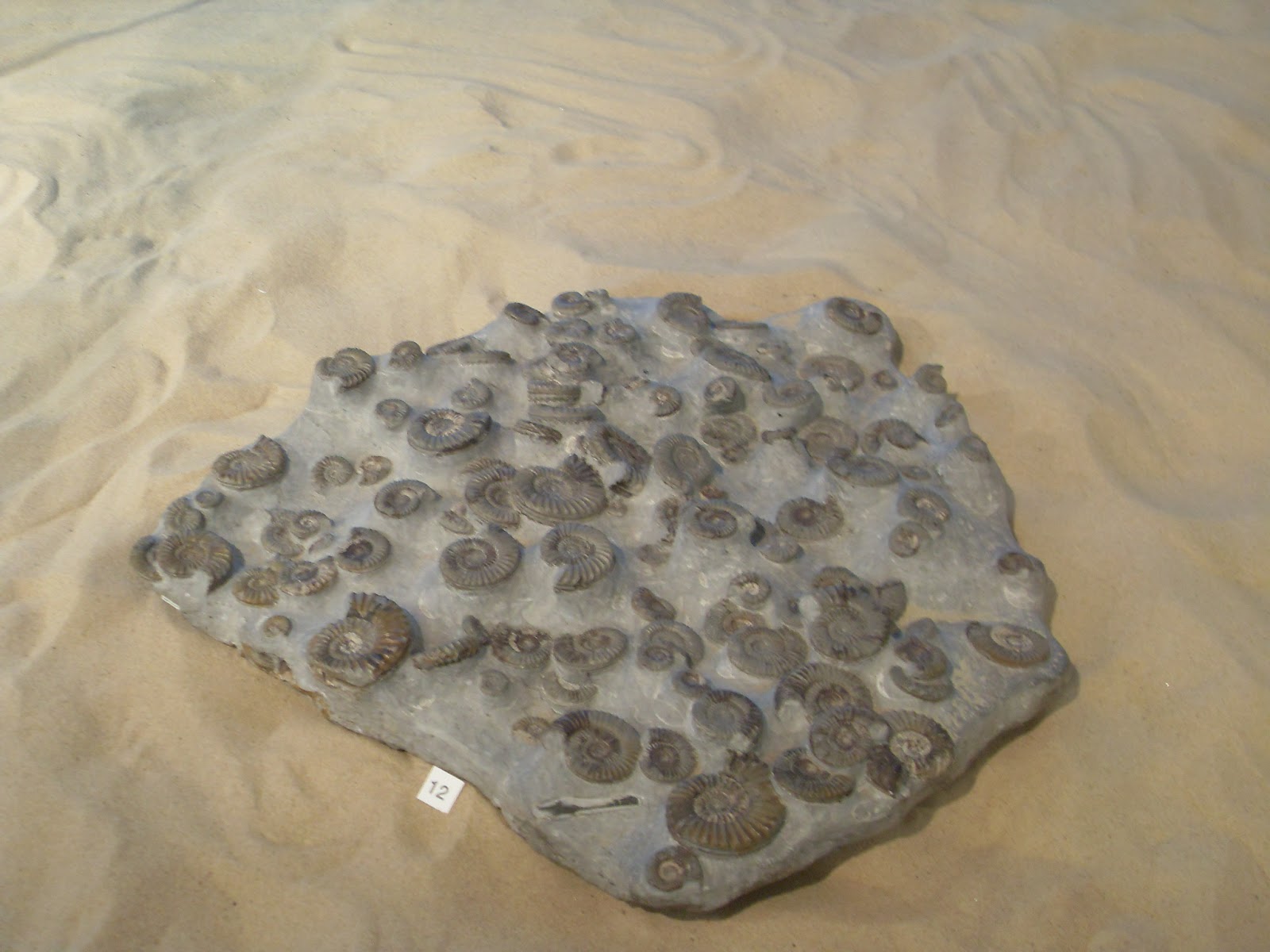
the earth-evicted ammonite, the raptor,
the trilobite class-caged and far removed from
primordial seas. Once this was wild country,
left to the reign of beasts, to fangs and claws.
Time has worn away that wild country,
what remains holds little semblance
while wild and tamed alike lie heavily
sleeping, white-capped and covered
waiting for sun and spring.


- June - August 2012


Notes
January

"while I have just arrived" - I arrived in York January 07 2011 ready to begin my studies at the University of York. The pictures from January are among the first I took.

February


(...) my sheltered perch - I lived on the upper floor in Constantine House and I was frequently bothered by nesting pigeons.

(...) of giants long receded - a nod to William Blake's The Emanation of the Giant Albion and a reference to York's significantly diminished importance in England's political life compared to its Medieval days.

(...) an emperor's name - the house being named after Emperor Constantine who was reportedly born in York.

March

my own conclusion - I left York 30 March 2011.

April

(...) their sigils in the stone - In the Middle Ages York was the nexus of the English king's northern politics and sometimes a thorn in the side. William the Conqueror and Henry VIII both wrought havoc on the city due to its reticence in accepting the former's accession to the throne and the latter's reformation. Other royals as well have made their mark upon York. John granted the city its liberties in 1212, Henry III refurbished the royal residence now known as Clifford's tower, Richard III established the council of the north and had his son invested as Prince of Wales here in 1483.

(...) the harried north - The Harrowing of the North was William the Conqueror's response to northern dismissal of his claim to the English throne.

then longboats were replaced - York grew to be an important mercantile centre in the Middle Ages and had ties to several European ports.

May

by their quills and pen - Bede's Ecclesiastical History of the English People is an important source to York's early Medieval history. York native Alcuin wrote a poem about York as did Joseph Brodsky. Auden's inclusion is primarily due to him, too, being a native of the city, hence fastening the city to paper by biographical circumstance.

July

for the sake of a coppiced kingdom - Henry VIII's divorce from the Roman Church came about primarily due to his need of a son to sustain the newly-established Tudor dynasty. St. Mary's Abbey was torn down in the 1540s.

August

there they received their freedom - John's charter of 1212 granted the city its liberties, a charter he issued to raise money for his military troubles in northern France. The octocentennial for this historical milestone is being celebrated this year.

they performed their plays - the York Mystery Plays started up in the 14th century and is one of the most important and formative cycles of mystery plays in Medieval England. The plays were discontinued in the 16th century as a part of the reformation, but started up again in the 1950s.

Barkers, carpenters, mercers - each play was performed and arranged by one of the guilds of the city. The barkers prepared hides for leather manufacture and were responsible for the The Fall of the Angels. The carpenters were responsible for The Resurrection, while the merces arranged The Last Judgement.

September

Darkness is easily endured - this entire stanza revolves around an evening out with friends in September 2011 when I was visiting my friends and former flatmates in York.

(...) Lest a guiding flare - St. Helen's Church is one of at least three churches in York whose spires are shaped like lanterns designed to guide people through darkness in a world before streetlamps. The wood of Galtres is no longer extant but it was once infested with wolves and a considerable obstacle for travellers.

(...) wolves whose haughty sermons - a reference to Archbishop Wulfstan of York's (d.1023) Sermo lupi ad anglos, a sermon admonishing Englishmen for their sins and claiming the Vikings as their just punishment from God.

October

Rot is October's fragrance - this stanza revolves around my first trip to York back in October 2009 and I remember very distinctly the smell of England.

the spiked heads of traitors - Micklegate Bar was the main gate of York in the Middle Ages and also where beheaded traitors were put on display as a warning to the people.

November

archbishops steeped themselves - Archbishops were among the most important political figures in the Middle Ages and the heart of the religious life in the North and consequently were very much engaged in secular matters, either in opposition or as partakers in the mundane affairs.

(...) a phoenix's nest - York Minster has been subject to fire and refurbishings throughout the centuries. The last fire was in 1984 and, as all Medieval cathedrals, it is perennially undergoing renovation. I owe this particular image to the tv series Pillars of the Earth based on Ken Follett's novel.

King Edwin's minster - St. Peter's minster was erected for the baptism of King Edwin of Northumbria in 627. This was a major step in the christianisation of England.

December

(...) class-caged and far removed - a nod to Charles Darwin's The Origin of the Species where Darwin rhetorically asks whether the beautiful ammonites were created so that men could put them behind glass.

haunted by dreams of blood and martyrdom - In the time following England's turn away from Catholicism York saw several martyrs of the old faith, most famously Margaret Clitherow.

formed like fossilised ferns - I have seen the frost make very fern-like patterns on the flagstone in York Exhibition Square in January.