And was the holy Lamb of God,
On Englands pleasant pastures seen!
- And did those feet, William Blake
Viser innlegg med etiketten York Minster. Vis alle innlegg

tirsdag 19. juli 2016

Saints, Stained glass, and Serendipity


Created purely from glass the saint stands,
Exposing his gifted quite empty hands
- Geoffrey Hill,
In Piam Memoriam


Towards the end of June I arrived in England for an intense bout of conference activities, starting in York for a few days and then continuing to Leeds. It was a hectic period, but by a stroke of luck it all began just in time for me to catch the last performance of the 2016 York Mystery Plays. From the beginning of the performances on 26 May I had seen several favourable comments and many tantalizing pictures from people who had gone to see the plays. I became very envious, especially since I had seen a performance of the 2012 Mystery Plays, and I knew I was missing out. I was therefore very happy when I had managed to procure a ticket for the very last performance in the evening of 30 June.

This year, the Mystery Plays were performed in York Minster, with a stage arranged like the stairs of a temple, with three broader steps on which the action was performed. The top step was Heaven, while the bottom step served both as the entrance to Hell and the tomb of Christ. It was a masterful performance, and I might write more about it at some later point. In this blogpost, however, my focus is a very serendipitous detail of that evening.


Window from the south side of the cathedral

Since the stage of the mystery plays was arranged like a stair, the seating was arranged like in a stadium, and in order to get a good overview I had bought a seat very high up, which brought me level with the first row of stained glass windows. I had been inside the Minster numerous times since my first visit there in 2009, but I have never been that high up and I might never be again. I knew that this might be a once-in-a-lifetime opportunity, so before the play started I made sure to examine the glass of the south wall as well as I could. Suddenly, however, I realized that I had been more fortunate than I could ever have imagined.


Edmund to the left of me, Edward to the right

As I was standing by the railing, I saw that one of the closest windows contained stained glass depicting two saints with which I have become very familiar over the past few years, namely Edmund Martyr and Edward the Confessor. I knew that the two kings were to be found in the wilderness of stained glass in York Minster. I once wrote a blogpost about the iconography of these saints as found in York, and experts on the subject told me that they were there and provided me with details. But there I was, staring them in the face and for the first time seeing them in real life and with my own eyes. I spent a long time trying to take good pictures of the individual windows, and the best results can be seen below. Regular readers of this blog, or people who know me well enough, will know that I have something of an obsession with these two saints, and this obsession has its root in my academic career. I wrote my MA on the cult and literature of Edward the Confessor, and I'm currently working on a PhD thesis in which an examination of the cult material of Edmund Martyr is one of the three major parts.


Edward the Confessor is easily recognized in this right-hand panel. This is not the only depiction of Edward in York Minster, another stained glass window featuring the saintly king can be found in the chapter house vestibule, dated to the latter two decades of the 13th century. In both depictions, however, Edward is seen with the ring, which is perhaps his most famous attribute and the one which is most often used in representations of him in glass, sculpture, painting or illuminations. The ring is of great importance due to the miracle depicted in the stained glass window above.

The miracle of the ring appears first in Aelred of Rievaulx's Vita Sancti Edwardi, which was finished in 1163, two years after Edward's canonization and in time for his translation on October 13. According to Aelred, Edward had once met a beggar who asked for alms, and when Edward realized he had no money on him, he gave the beggar his ring instead. Later, two English knights in the Holy Land were approached by a man who said he was John the Evangelist, and gave them a ring which he asked them to bring to the king of England. This the knights did, and Edward recognized the ring understood the miracle. The miracle of the ring was so famous that it was included in the chapter on John the Evangelist in Legenda Aurea, but with Edmund Martyr in the place of Edward through some strange confusion.


Edmund Martyr is also found other places in the Minster. He is also found among the seven windows of the chapter house, and on a wooden panel once found in the chapter house ceiling (13th century), but now among the treasures of York Minster displayed in the crypt. Edmund is recognized by the arrow he holds in his hand, and this is his most common attribute. The arrow - or sometimes arrows - are the instruments of his torture. According to the first life of Edmund, Passio Eadmundi, which was written by Abbo of Fleury in the 980s, Edmund was seized by a group of Danish Vikings, tied to a tree like Christ on the cross and then pierced through with arrows like Saint Sebastian. When Edmund still refused to submit to the lordship of the Danish chieftain, he was decapitated and his head carried off, but that is another story.


Having worked this much with these two saints, it was a very pleasing serendipity to find myself on the level with these two otherwise inaccessible depictions, and that on the very last day it was possible for me to do so. Such instances of good luck can sometimes be found in the course of academic work, and they are always very welcome and very pleasing.


Similar blogposts


Edmund likened to a hedgehog

Edward the Confessor in the North of England

The miracle of the ring in Legenda Aurea

Edward the Confessor in Dringhouses, York

The cult of Edward the Confessor


fredag 22. november 2013

Edward the Confessor in the North


Ever since completing my MA thesis I have had a potentially unhealthy obsession with Edward the Confessor. This is why I tend to use him as a point of reference when exploring the medieval catalogue of saints, and this is also why I keep a lookout for his iconography, and I'm always excited to learn of new images and new renditions of him. For this reason I was very happy to find a stained glass window in York, which to my mind most likely depicted Edward the Confessor, and this blogpost gives an introduction to Edward's standing in the North.


The above stained glass can be found in St. Helen's Church, York, and dates to the later Middle Ages. The church is situated in the centre of York and was the parish church of glass-painters who resided in Stonegate, and their emblem can be found among the extant stained glass paintings.


The window portraying Edward the Confessor is placed in a group comprised of - from left to right - William of York, the Virgin Mary and St. Helen. Edward is the rightmost figure, and as seen above he holds an object which looks like the ring he reportedly received from John the Baptist, and which was one of his major attributes in medieval renditions of him. The story was told by Aelred of Rievaulx and gained immense popularity. In the information leaflet provided in the church, it is suggested that this figure is Emperor Constantine, but this is highly unlikely since he was not considered a saint in medieval times - at least not officially. In a book on stained glass in York which I stupidly forgot to note, but which can be bought at Waterstones in the city, it is stated that the glass does indeed depict the Confessor, though no evidence is cited for this. I, however, believe this to be the only likely explanation for iconographic reasons.

William of York (d.1154, can.1227)

Virgin Mary

Interestingly, this painting situated below that of the Virgin Mary, may also depict the Confessor, possibly together with St. John the Evangelist, to whom Edward was especially devoted

St. Helen

After this find I went to visit York Minster's undercroft where I happened to note a roof painting from the York Minster chapter house depicting St. Edmund of East Anglia. The painting in question dated from c.1290. I was quite excited to see this, since I have a major fascination for the cult of St. Edmund as well as that of St. Edward, and these two saints often appear together in later medieval art (and also sometimes in literature). This was the second depiction of St. Edmund I had found in York, the first being a carving from St. Mary's Abbey, which was refurbished in the 13th century. The figure can be found at Yorkshire Museum together with St. Cuthbert.

Edmund holding his arrows

Cuthbert, holding the head of St. Oswald

After having found St. Edmund, I went to ask one of the curators whether there were any depictions of Edward the Confessor in the Minster, and he told me there was none to be found to my initial surprise, seeing as the Confessor had in his time been generously munificient towards the Minster. The curator was wrong, however, as there is a 14th-century depiction of Edward in the lady chapel, but this I learned later. As I talked about the subject with the curator, however, I remembered a few important details from my MA research which made it all abundantly clear why Edward should ostensibly - yet incorrectly - not be present in the York Minster art programme.

St. Edmund and his arrows, painting from York Minster's chapter house, c.1290

Edward's lack of widespread support in the North is a result of the long-standing conflict between the North and the South, and in particular between the Archbishopric of York and the Archbishopric of Canterbury, at that time locked in a continuous squabble over whose archbishop was the primate of England.

This division in the English medieval church runs deep, and when Osbert of Clare failed in his petition to have Edward canonised by the Papacy around 1138, lack of wide ecclesiastical support was probably one of the main reasons why he failed, together with King Stephen's meddling in the Church's affairs. After the Anarchy, however, Alexander III granted the request for canonisation due to the wide clerical support Osbert that had been lacking earlier, and the 12 surviving petition letters do indeed represent a wide clerical spectrum, including the Archbishop of York. However, this unity proved deceptive and when Edward the Confessor was translated to a new tomb at Westminster on October 13 1163, only the diocese of Canterbury was represented.

The lack of devotional paraphernalia pertaining to Edward the Confessor in York suggests that this strife between the two archbishoprics were long-standing and that to the northerners, Edward the Confessor remained a southern saint. It should also be noted, however, that Edward never achieved any wide popularity beyond Westminster and the royal court, so this is not very surprising after all. However, not even Henry III's presence in York - he refurbished Clifford's Tower as his royal manor - was sufficient to move York towards greater appreciation of Edward, and instead the citizens and the clergy focussed on local saints and, as it seems, St. Edmund, whose fame rivalled that of Edward for most of the 12th and 13th centuries in the country at large. Interestingly, this goes contrary to the claim made in the liturgy for Edward the Confessor, composed at Westminster in the 12th century, where it is stated that the entire country rejoices in his sanctity.

I do not know who commissioned the stained glass windows of St. Helen's and York Minster's lady chapel, or what moved the former to place Edward alongside an important local saint such as William of York. Nonetheless, this is an interesting anomaly in York's devotional landscape, and it shows the disparity between the overarching devotional trends and personal preference.

It is of course important to note that absence of evidence is not evidence of absence, and it may be that Edward had a more prominent role among York's medieval citizenry than has been known or is suggested by the surviving material. Yet ecclesio-political considerations suggest that there is not much to find in this department, and it is perhaps emblematic that the only church around York dedicated to Edward that I know of, is the 19th-century church at Dringhouses.


Bibliography


Dutton, Marsha (ed.) and Freeland, Jane Patricia (transl.), Aelred of Rievaulx: The Historical Works, Cistercian Publications Inc., 2005

Farmer, David, Oxford Dictionary of Saints, Oxford, 2004

Hope, Steffen, The King's Three Images - The representation of St. Edward the Confessor in historiography, hagiography and liturgy, Trondheim, 2012

Rex, Peter, King & Saint: The Life of Edward the Confessor, The History Press Ltd, 2008

Scholz, Bernhard W., "The Canonization of Edward the Confessor", printed in Speculum, Vol. 36, No. 1, 1961

Williamson, E. W. (ed.), The Letters of Osbert of Clare Prior of Westminster, Oxford University Press, 1998


fredag 31. august 2012

Under the Greenwood Tree


He went into the garden, beneath the shade
- The Song of Roland, line 11 (translated by Glyn Webster)


During my most recent sojourn in York I spent most of my days meandering the town, seeking out things familiar and new alike. To walk the streets of York, however, can sometimes be somewhat of an ordeal, especially in tourist seasons when stereotypes of all walks of life flock through the street, draining the atmosphere out of the cityscape. At times these hordes must be endured, at time circumstance compelled me to navigate the thronged thoroughfares, dodging the onslaught of half-oblivious strangers trying to find their way through the streetweb. It was, however, wearisome in the long run, especially because tourists very often come off, as if by their own design, as crass, loud, ignorant and careless, standing without awe in the face of history.

It was, therefore, a great delight whenever I could retreat to a quiet corner of one of York's public parks, sit down by the trunk of a tree and read a book, left to myself and the immediate vicinity that for the most part remained empty and relatively quiet. In this blogpost I present two of my favourite spots in York, ideal for quiet contemplation, reading, prayer or perhaps even a little nap.

Resting under a greenwood tree of course becomes all the more pleasing when considering the mythic-historical connotations. In The Song of Roland both Charlemagne and King Marsile are seated under the branches of an old tree when conducting affairs of war and state. This image of the tree of council was prevalent in 19th-century Romanticist art, and the forest - maybe as a symbol of the wild as in Renaissance paintings - featured also in compositions not directly related to kings and warfare. An interesting example is Lawrence Alma-Tameda's 1862 painting of Venantius Fortunatus reading to Queen Radegund.

Sitting under a greenwood tree, therefore, reading a book and watching the world from a quiet tryst is a pleasant activity in itself, but being a historically minded Medievalist the iconography of the past lends an air of ancient venerability to the activity.


Yorkshire Museum and Gardens


Dean's Park


Come hither, come hither, come hither:
Here shall he see
No enemy
But winter and rough weather
- Under the Greenwood Tree, William Shakespeare


torsdag 23. august 2012

York Elegies


This summer I read Joseph Brodskys Roman elegies, a set of poems invoking the minutiae of everyday life and the great shadow of history at the same time. Having been to Rome some time ago I felt the poems resonating with me and it made me think of other places I had visited, places where I had spent as much time as it appeared Joseph Brodsky had spent in Rome. My thoughts naturally fled to York, a city regular readers of this blog will know I have a special place for in my heart. The next course of action was inevitable: I decided to write my own elegies in emulation of Brodsky's, only these were to be set in the heart of Yorkshire rather than the eternal city.

York Elegies
After Joseph Brodsky


I) January

The rain in England is different. By the banks of the Ouse
there are imprints of boots in dried and sun-cracked silt:
some vagrant walked here. It was - perhaps - me,
carefully making sense of a different home
like a mendicant scouting the city's outskirts
before lining up his hospital.
The river is borne away into the twilight
while I have just arrived,
still are we both just passing through
and even in this month of beginnings the end
can be sensed far closer than I should like.
So like the silt-framed footprint will I fade
until devouring time has wiped away
all traces of my visit I had left behind me.


II) February

Vagrants find their homes in the strangest nooks.
So I, the prodigal scholar, have found
my sheltered perch among the pigeons.
Here I share the skyline with these English chimneys
that breathe their carboniferous fogs mingling
with the mists of each and all seasons. Smoke
speaks of Albion's slumber, of giants long receded
from the world's theatrics, content with the quiet moor,
the country life. I, too, am content with little:
the writing desk, the sink, the creaking wardrobe,
the bed and bookshelves begging to be stacked;
this is the detail I find most pleasing.
Here will I make my garrison, and from this outpost
must I conduct my campaigns through the books
only the fool thinks he can conquer. You, O House,
have an emperor's name and your dilapidations
become a bitter metaphor for the fall of too proud men.


III) March

The world seems at an end beyond this precinct.
Engulfed in the sunset's imperial holocaust
the earth's rim fades to ashes and go black,
and I, shielded by the guardian archer's
crenellated vantage point, can almost see
my own conclusion mirrored in the waning light.
Have you ever walked the walls of York at sundown,
seen its ghosts parade in the evening, or with your naked eye
trailed the minute stitches of their tapestry?
The sun requires no more than this:
to have its death lamented by the mirroring Ouse.
Why, then, should I demand a boisterous farewell?
Let me rather like the sun recede into enveloping darkness,
let me wind my way through the world and back
so that when I return I will be greeted
not as a prodigal but as a native, and let me once again
feel the weight of History upon my bones.


IV) April

This city has seen much blood. Here kings and queens
with royal cunning placed their sigils in the stone
to the dirge of wailing women and the crackling flame.
O heart of the harried north: what tears you may have left
spare them for the years to come: History
has not yet run its course. Once this was warrior country,
then longboats were replaced by the merchant's cogs
that brought about an empire in their golden wake.
I have no stomach for the trader's tricks, the drawn sword
or the government's orderly cartography
dividing the terrain like a knife does a hog's shank.
I much prefer the brick-walled lanes,
the domestic nooks that are Albion's heartland:
weather-beaten, plain and half-forlorn
save by the pigeon's armies. Rather than famous
battlefields I find a pleasure roaming these homely streets
and observe from a safe and objective distance
the ubiquitous ivy's recalcitrant advance.


V) May

This is a city of books. The various and time-worn
stones and bricks are pages of the city's history,
and this makes churches, walls and houses tomes
composed in a language different yet somehow quite familiar.
Select, then, a volume from this library, peruse its chapters,
illuminations, marginalia; read in the churches and gates
a history we try to be a part of. Famed men have
by their quills and pens put York to paper:
Bede, Alcuin, Auden, Joseph Brodsky.
Yet York has not been written by scribes or scholars,
but by the master mason, the architect, the carpenter,
the glazier who bound these books by their own
enduring crafts, lined on the earth's bleached parchment
the margins with their instruments, prepared the churches' quires
and stacked the streets with chronicles, shelving
the houses according to an old, time-honoured system
like librarians part serious, part playful.


VI) June

Can one mourn what one has not possessed?
Yes: like the eye mourns the horizons it has not seen
or the mind the books unread, so do I mourn
that I have not yet known the City of York
as it appears in June, attired for the first of summer's masques.
June, the epoch of the daffodils guarding Clifford's Tower
like sentries superannuated by the whims of time,
the epoch of strangers and vagrants,
roaming about the streets like ghosts or gods
exiled from a long-lost fabled country
so distant and so different from ours,
the epoch of sun and tired sundays broken only
by the chime of minster bells, summoning
the faithful and the faithless by the same forsaking ting.


VI) July

Speak not to me of love, for it has lost its touch
by taking too many forms; for precision
speak rather of longing and that aching absence
July demands from the homebound exile. Sighs
are the prodigal's tithe and all must pay.
I did not at first believe mere stone could command
such obedience, yet here I am - a wandering man -
remembering the churches, the walls, the scattered spolia
that frames the gardens and keeps the flowers at bay
in almost-monastic discipline. These were all framed by love
and in the end torn down by a different love,
a worldy love of kingship and inheritance that
plows the potter's ground. By that act it seemed
the age-old war was over, the mundane sword
cleaving the sacred stone claimed monarchy supreme,
blasphemed the mason's craft and outlawed monastic houses
for the sake of a coppiced kingdom frail in its burgeoning.


VIII) August

Like a road redundant yields to the willow herb,
the dandelions and the tall grass so I,
a native stranger, consider a year too long
and yield to the gnawing urges,
packing my bags and go down the westward road.
Albion rises in the mind's horizon
pressing heavenward with its spired, craggy bulk,
green-coated, wind-harrowed, arching
as in pain under the weight of its past.
And there, there is Albion's jewel:
heart of the Northern reaches,
chiming its sundry bells to a song I know.
There they received their freedom, there
they performed their plays in honour of God
and Christ, and the Holy Spirit:
Barkers, carpenters, mercers, men of all trades,
Coaxing me thither with a song of the heart-stringed lute.
So I come, heeding its beckoning whisper
Like a vagrant gyrfalcon the pipe of its falconer.


IX) September

Darkness is easily endured with good friends.
We make our way through evening and the air
is still, clear and the light of lamps
hints at the city's outline in the quietness.
Once light was scarce and the world wild,
the wanderer was prey to the mighty beasts
who ruled the wood of Galtres and craved tallage
in flesh of men and women. Lest a guiding flare
ablaze in the lantern of St. Helen's Church
would lead them to salvation, the children of men
might fall as sheep for wolves whose haughty sermons
pander to nothing at all but their maw's faith.
The wood is long since gone, the light remains
and even in the labyrinth of lamp-posts
the lantern shines so meekly and yet and so bright
it still may lead the wayward through the world's maze.


X) October

Rot is October's fragrance: decaying, brittle leaves
gather in clusters by the iron fences,
in glutted ditches, ponds of no man's dominion
and sweetly ooze through the suburbs
on the road to Micklegate Bar as once did
the spiked heads of traitors on the gate's front.
I am a traitor too: my affair with the English tongue,
old and long-standing, has proved far more than a fling.
Rot is a poignant metaphor for a human thing:
Loyalty; houses; flesh; identity.
There is a gentler scent suffused in the pubs and
the rented rooms, of oak and fungi,
beer and decomposing wood, like frail lives
growing musty in the hands of History
to fall as oblivious vestiges into marginal notes.
This is the place I love: My Albion is crumbling at the edges
and curls as a dying leaf in October days.
Such was the first encounter;
it will not do to go separate ways.


XI) November

From this point men can rule a world:
lords of the spiritual North with pious pomp
wielded their sceptred croziers
in the face of kings to have the world's sword
tarnished. Atop St. Peter's minster a priest,
guarded by grinning gargoyles
and xiphoid spires piercing the firmament,
may feel removed from the secular stain. Below
archbishops steeped themselves in the ways of flesh,
to fight or to be fought with in their chosen manner,
dying as rich men or as God's minstrels.
This is a nest of stone, a phoenix's nest
that burns and rises at quaint intervals,
making the mason mourn his lost handiwork
and weep like an angel. Sing, then, a dirge for
what Earth has lost, for King Edwin's minster,
the glazier's vitrified blood, the weather-worn woodwose
and men who abandoned their faith for the sword's work.


XII) December

I write this in August imagining a white world.
I hope one day to discover how the snow descends
upon these fractured ruins: history's great slumber
haunted by dreams of blood and martyrdom,
rigid justice, blank eyes staring hostless
from an iron spike. In that time
the frost will forge its finest filigree
formed like fossilised ferns on the city's flagstones,
memorials of time immemorial honouring
the earth-evicted ammonite, the raptor,
the trilobite class-caged and far removed from
primordial seas. Once this was wild country,
left to the reign of beasts, to fangs and claws.
Time has worn away that wild country,
what remains holds little semblance
while wild and tamed alike lie heavily
sleeping, white-capped and covered
waiting for sun and spring.


- June - August 2012


Notes
January

"while I have just arrived" - I arrived in York January 07 2011 ready to begin my studies at the University of York. The pictures from January are among the first I took.

February


(...) my sheltered perch - I lived on the upper floor in Constantine House and I was frequently bothered by nesting pigeons.

(...) of giants long receded - a nod to William Blake's The Emanation of the Giant Albion and a reference to York's significantly diminished importance in England's political life compared to its Medieval days.

(...) an emperor's name - the house being named after Emperor Constantine who was reportedly born in York.

March

my own conclusion - I left York 30 March 2011.

April

(...) their sigils in the stone - In the Middle Ages York was the nexus of the English king's northern politics and sometimes a thorn in the side. William the Conqueror and Henry VIII both wrought havoc on the city due to its reticence in accepting the former's accession to the throne and the latter's reformation. Other royals as well have made their mark upon York. John granted the city its liberties in 1212, Henry III refurbished the royal residence now known as Clifford's tower, Richard III established the council of the north and had his son invested as Prince of Wales here in 1483.

(...) the harried north - The Harrowing of the North was William the Conqueror's response to northern dismissal of his claim to the English throne.

then longboats were replaced - York grew to be an important mercantile centre in the Middle Ages and had ties to several European ports.

May

by their quills and pen - Bede's Ecclesiastical History of the English People is an important source to York's early Medieval history. York native Alcuin wrote a poem about York as did Joseph Brodsky. Auden's inclusion is primarily due to him, too, being a native of the city, hence fastening the city to paper by biographical circumstance.

July

for the sake of a coppiced kingdom - Henry VIII's divorce from the Roman Church came about primarily due to his need of a son to sustain the newly-established Tudor dynasty. St. Mary's Abbey was torn down in the 1540s.

August

there they received their freedom - John's charter of 1212 granted the city its liberties, a charter he issued to raise money for his military troubles in northern France. The octocentennial for this historical milestone is being celebrated this year.

they performed their plays - the York Mystery Plays started up in the 14th century and is one of the most important and formative cycles of mystery plays in Medieval England. The plays were discontinued in the 16th century as a part of the reformation, but started up again in the 1950s.

Barkers, carpenters, mercers - each play was performed and arranged by one of the guilds of the city. The barkers prepared hides for leather manufacture and were responsible for the The Fall of the Angels. The carpenters were responsible for The Resurrection, while the merces arranged The Last Judgement.

September

Darkness is easily endured - this entire stanza revolves around an evening out with friends in September 2011 when I was visiting my friends and former flatmates in York.

(...) Lest a guiding flare - St. Helen's Church is one of at least three churches in York whose spires are shaped like lanterns designed to guide people through darkness in a world before streetlamps. The wood of Galtres is no longer extant but it was once infested with wolves and a considerable obstacle for travellers.

(...) wolves whose haughty sermons - a reference to Archbishop Wulfstan of York's (d.1023) Sermo lupi ad anglos, a sermon admonishing Englishmen for their sins and claiming the Vikings as their just punishment from God.

October

Rot is October's fragrance - this stanza revolves around my first trip to York back in October 2009 and I remember very distinctly the smell of England.

the spiked heads of traitors - Micklegate Bar was the main gate of York in the Middle Ages and also where beheaded traitors were put on display as a warning to the people.

November

archbishops steeped themselves - Archbishops were among the most important political figures in the Middle Ages and the heart of the religious life in the North and consequently were very much engaged in secular matters, either in opposition or as partakers in the mundane affairs.

(...) a phoenix's nest - York Minster has been subject to fire and refurbishings throughout the centuries. The last fire was in 1984 and, as all Medieval cathedrals, it is perennially undergoing renovation. I owe this particular image to the tv series Pillars of the Earth based on Ken Follett's novel.

King Edwin's minster - St. Peter's minster was erected for the baptism of King Edwin of Northumbria in 627. This was a major step in the christianisation of England.

December

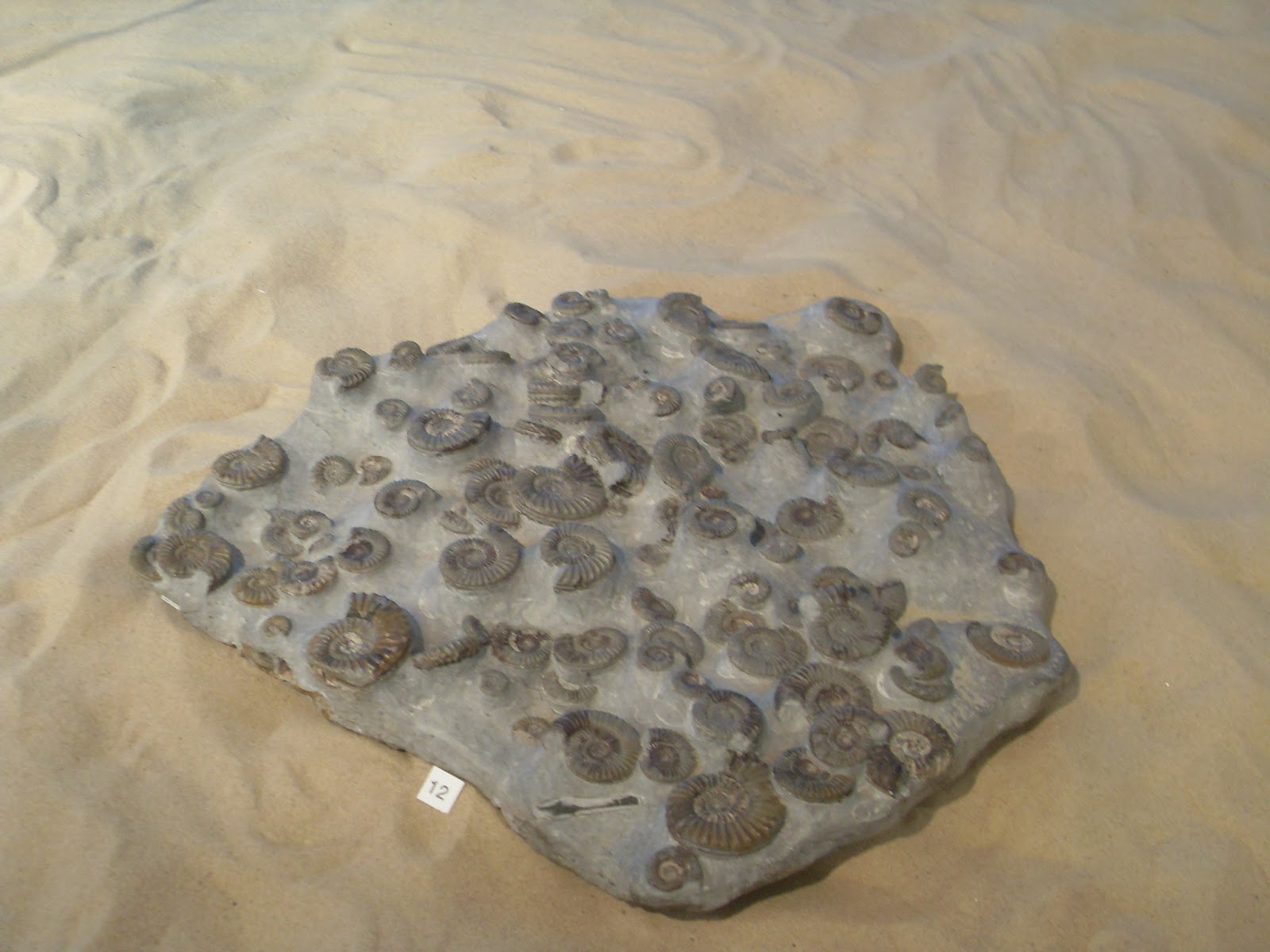
(...) class-caged and far removed - a nod to Charles Darwin's The Origin of the Species where Darwin rhetorically asks whether the beautiful ammonites were created so that men could put them behind glass.

haunted by dreams of blood and martyrdom - In the time following England's turn away from Catholicism York saw several martyrs of the old faith, most famously Margaret Clitherow.

formed like fossilised ferns - I have seen the frost make very fern-like patterns on the flagstone in York Exhibition Square in January.